Choosing the most effective instructional approach
FHWA takes laws passed by Congress and writes specific regulations that clarify what compliance with the law looks like. Every highway or road project that uses federal money must comply with these regulations, which can be complex. One course FHWA offers is for acquisition agents who negotiate with private property owners to acquire properties for federally-funded projects.
FHWA came into the project with clear goals, including:
- A thorough analysis of existing content, potential learners, and the optimal hybrid format for learners and FHWA
- A course design plan outlining how to convert 24 hours of in-person content into a hybrid blend of web-based learning experiences
- Storyboards for each learning experience
- Prototypes for creating the different learning components later
- A flexible instructional timeline that would allow the course to be taught in as little as one week or as many as 4
A flexible, hybrid learning experience learners can join from anywhere
BLS began by conducting a comprehensive analysis of the audience (existing and potential), the market, and different possible course formats. This work informed the structure of the final course, including what content and activities were retained and which were removed or retooled.
Analysis Report
BLS analyzed participant data to determine what elements of the existing course were valued by past participants and which could be improved. We also looked at data related to other hybrid courses to see where comparable courses were exceeding or falling short. We used this information to highlight and retain the strengths of the existing course, avoid potential pitfalls experienced by other hybrid courses, and write recommendations with rationale that program administrators and stakeholders would clearly understand. Trade-offs were inevitable, but the analysis ensured that decision makers were fully informed as they selected a format.
Updated Curriculum
BLS analyzed existing content, the latest regulations, and sound instructional practices to design a new course. We revised learning objectives, added and removed content, and changed content as needed. We decided which content would most benefit from being instructor-led and which could be completed independently in eLearning lessons. We described different instructional strategies and our recommendations for using them. We created updated templates. We updated the existing course quiz to align with the new learning objectives and be more intellectually rigorous. We considered the needs of diverse learners and ensured that all products would be accessible for all learners. At pivotal points during development, we met with FHWA to ensure that our design fit their vision, would meet their needs, and was consistent with their understanding of their learners and the content.
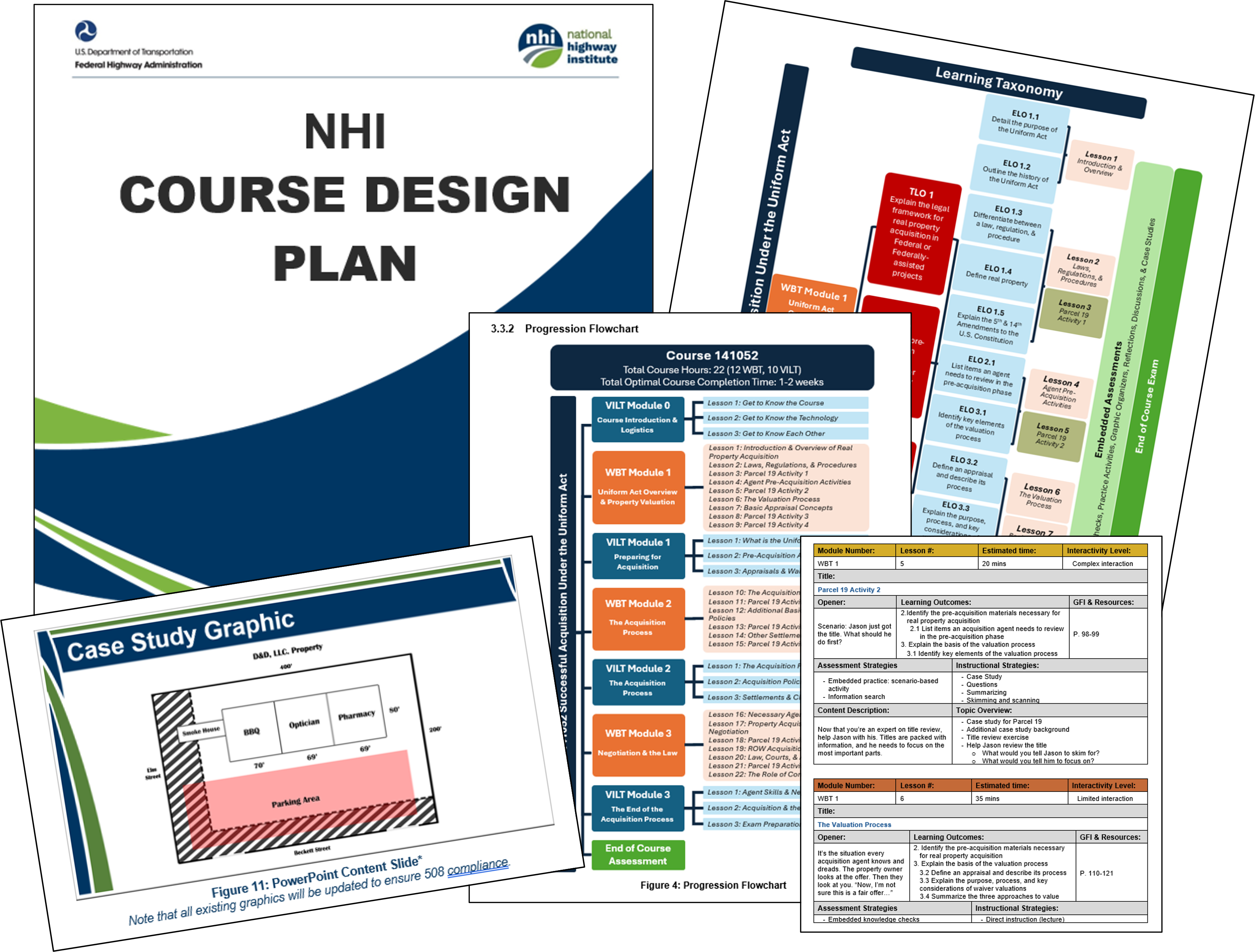
Different Formats for Different Purposes
Ultimately, BLS created a hybrid course consisting of virtual instructor-led training (VILT) sessions spaced to allow learners to complete a set number of eLearning and microlearning lessons between each VILT session.
- 4 VILT sessions: Provided opportunities for networking, discussion, and working with content experts
- 13 eLearning lessons for content instruction
- 9 microlearning case study lessons: Provided an example of the eLearning content in action and a frame to carry learners through the full course
- 1 end of course assessment